
I am not going to lie. Never have I ever watched a horror film in an actual cinema mainly because I am not the most courageous kind of audience who would come in to the theater without any kind of cover or any way to pause the movie when I want to so I can stray from potential jump scares.
Nonetheless, I have noticed a recurring direction in the most recent horror movies: they are starting to become less frightening. Not that it is a negative critique, however (at least I can rest more easily), but I have seen that they are starting focus less on the technical ways of scaring people and more of the “symbolic” ways of scarring the audiences. Get Out (2017) did not have your typical frights but left the impression of that racism isn’t shown in hatred; it is also shown obsession. Hereditary (2018) did not just let something scary come out of nowhere; it lets it linger on-screen which I think is much worse. And then there’s The Endless (2017), which I frankly never found it to be horrifying at all.
Where Get Out delves into social realism while Hereditary deals with familial despondency, The Endless shows “the fear of the unknown.” Throughout the film, the audience literally could not understand what was going on, but little by little, when the clues come together, they make more sense, yet this “unknown” antagonist is not what intrigued me the most of this film. The most compelling of all was the human behavior in how we react to the unknown, and it was shown in two ways.
The first one was when Camp Arcadia decided to play a lost videotape, and it projected the two protagonists, the Smith brothers, “promoting” or misrepresenting the camp by portraying them as a radical Christian cult. It’s interesting to note as well that prior to these events, the film revealed through a news report that the two were rescued from the so-called cult. At first, the anger of Hal, the supposed key figure of the camp, does not seem justified, until as the film progressed, it was revealed that it was not a cult after all. They were a group helplessly stuck in the time loop and submit to it. This reveals a theme of incorrect identification and the dire effects of it. Because we misrepresent people or groups, we end up castigating them when they are supposed to be helped.
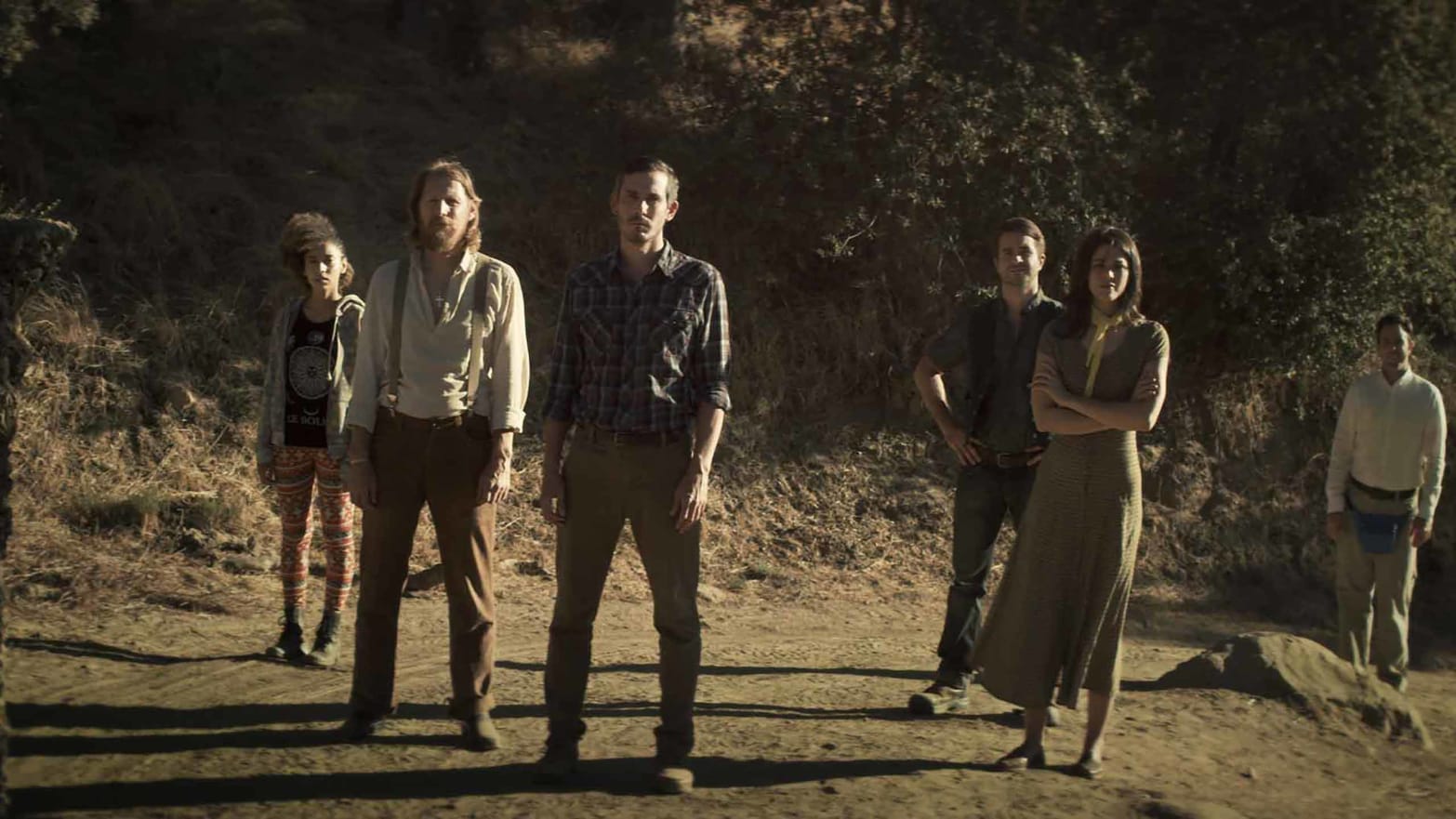
The second was when Aaron admitted to Justin that he wanted to stay in Camp Arcadia despite being set in a dangerous time loop. As unreasonable at it may sound, Aaron made a compelling argument how that setting was better than living out repetitive lives in the modern world they resided in after escaping the camp. To be fair, he did have a point, as Camp Arcadia seemed like self-sustaining community with motivating activities and varying occupations. Then again, Aaron just brushed off the trade-off or the catch. Here, it reveals another feared theme of submissive adaptation to the shortcomings of one’s environment.
The saddest part of the two ideas is that, in the real-world, they somehow manifest themselves. In Europe, some mislabeled refugees as Muslim terrorists or invaders, an idea that is a product of the far-right movements. Across the world, people think that it is okay to adapt to a warming climate rather than fighting back because we passively think everything will be okay. Some of us just don’t think so.
In silent contemplation,
JoMar Fernandez a.k.a JMCthefilmystan


 Elements of Screen Arts (2019)