Kimi no na wa (2015) – Modernism and Traditionalism

I have noticed a pattern of difficulty in the reflection posts that I have written. The easiest ones two discuss generally are those with a variety of meanings to explore, and the hardest ones are those that just give it to you as it is. In retrospect, that explains why the essays of Gojira, and Velvet Goldmine to an extent felt stale. I really could not delve in too much of them.

That being said, prior to writing this very essay, I was afraid that the same case could repeat here, but don’t get me wrong. Kimi no na wa (2015) I believed was one of the best anime films that I have watched in a long time, not since Spirited Away, but in all three films, I didn’t think there is some fundamental meaning or symbolism to it. However, a common theme that I only started to notice recently in them is the confluence of modernism and traditionalism, and Japan just exudes that mix of two different worlds so well, but only in Kimi no na wa did it have an argument on why Japan is such a  peculiar case.

 Firstly though, the film tries to establish the clear differences between the worlds through the perspective-taking of our primary antagonists, Taki and Mitsuha. The former living in the bustling metropolis of Tokyo and the latter in the mountainous countryside of the Gifu Prefecture. The most popular plot device used in the film was when the characters’ consciousnesses were switched, leaving both in their own fish-out-of-water situation.

Curiously, when they switch, they learn something about each other’s worlds and start to gain a sense of appreciation that the other person could ironically not relate. Mitsuha in Taki’s body learned to appreciate what could be a more-than-friendly relationship with the head waitress and Taki’s crush Miki Okudera. Taki meanwhile gained a sense of wonder in learning the traditions related to Musubi, the deity responsible for the body-switching.

The latter proved to be of great importance in the rescuing of Mitsuha and her town Itomori from a destructive rogue comet, and in the later parts of the film, it was revealed that this was not the first time it happened to Mitsuha’s family. It implied how this Musubi deity had foreseen the disaster, but not one of them could comprehend fully the signs and traditions that it offers. Thus, it also implicitly reveals the message that keeping centuries of traditions are too important to be abandoned or lose their meaning altogether.  In Shinto, Japan’s primary religion, the kami or the spirit will always co-exist with human life, and they will always reveal and promote pure heartedness and truthfulness to the Japanese people, as heeded by the obedient and vigilant Taki. This is something that modernism did not offer much out of arrogance, as seen in Mitsuha’s politically inclined father or the astrologists failing to see pieces of the comet from falling.

I guess other countries may want to take notes from Japan. On paper, it may look like the country people just want to keep spiritual traditions for the sake of it, but deep down, there are layers of meaning to it, and such timeless virtues could not be sacrificed.

Yours truly,

JoMar Fernandez a.k.a. JMCthefilmystan

Source used:
https://www.britannica.com/topic/Shinto

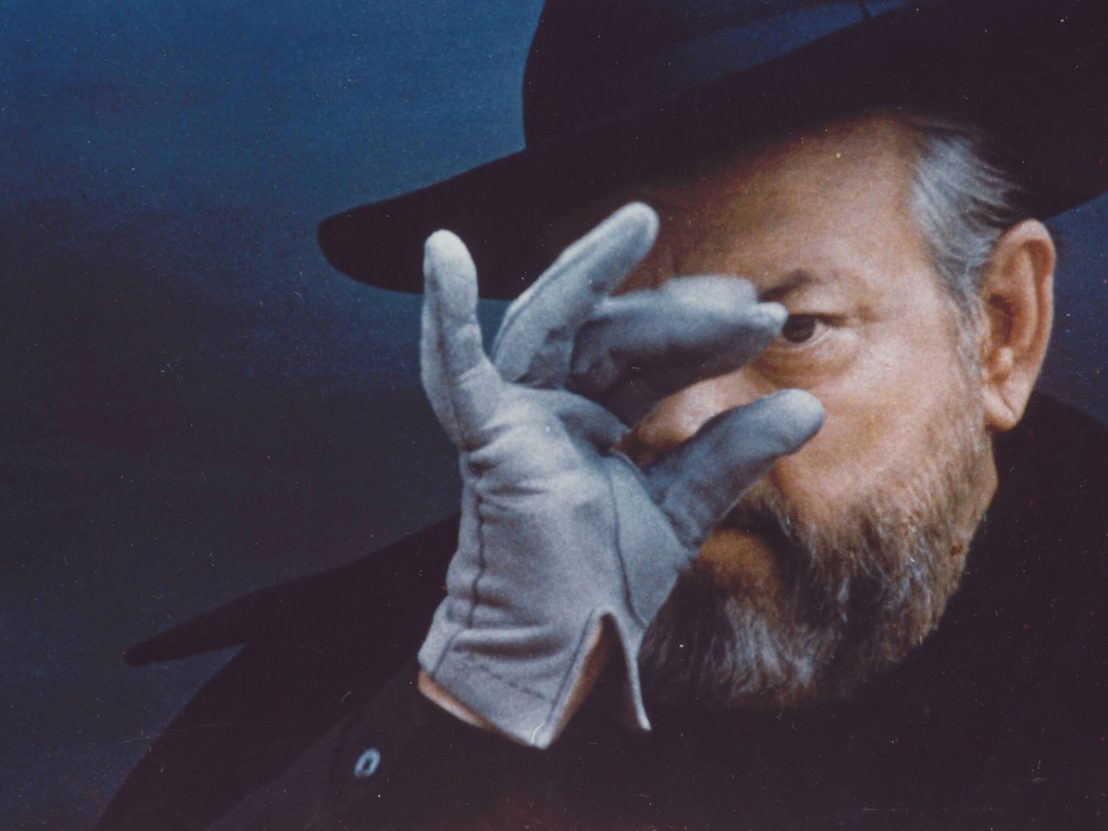
F for Fake (1975) – The Importance of Tone

The lie is more than what meets the eye.

Among my favorite activities I do during my spare times is to tour around the Ateneo Art Gallery despite not being a painter or sculptor myself. Unlike screen arts, though, I never really cared if the work of art displayed even has a meaning. What mattered was how appreciative it is too see how dynamic the artists’ sense of beauty is. Likewise, I never paid too much attention to who created or authored it in the first place (unless of course it is from someone famed like Nick Joaquin whose display I admired about two years ago), and when one would test me with identifying the real and the copy between two identical works, I honestly still would not even care. The fakery of the painting or a sculpture is irrelevant to me when it still strikes the same “tone” as the original, and apparently, I was not alone, as revealed in the film F for Fake (1975).

As I have learned from further reading, F for Fake turned out to be a film essay, a genre of film that I was not familiar with except through documentaries, their closest equivalent genre. As with its written counterparts, film essays are typically focused with developing or elaborating on one theme or idea than forming a narrative, and for the case of F for Fake, it discussed about the creation and proliferation of fakes in the art painting industry with Elmyr de Hory, an art forger, as the movie’s prominent example.

I’ll be lying if I said that I did enjoy much of the film; it felt dragging and uninteresting until the last sixteen minutes when the narrator Orson Wells shared the story of Picasso and his twenty-two paintings of Oja Kodar. I got very engaged when he and Oja herself recreated that very story through intense dialogue, then their dropped the bomb when they reveal that all of what happened was purely fictional. I low-key laughed at myself for easily falling for sixteen minutes of lying than more than an hour of the actual truth, and come to think of it, I should have seen it as a sign since the beginning when Welles was showing a magic trick with a child at the train station.

“Houdin was the greatest magician who ever lived. And do you know what he said? ‘A magician,’ he said, ‘is just an actor-Just an actor playing the part of a magician.’”

Orson Wells, F for Fake (1975)

And it felt just like that: the last sixteen minutes was a very convincing magic trick, using the power of tone as its spell.

Surely, setting the tone of the film is essential in making or breaking a film in relation to its audience, and to effectively get the message across. Interestingly, relaying the theme of forgery in the first hour of truth-telling seemed disengaging, as Welles was narrating too causally, but when he switched to a dramatic way of speaking in telling the lie, that was when all eyes and ears are on the screen. With the usage of heavily contrasting tones, Welles intelligently portrayed the message of being easily fooled by tricking the audience themselves (Insert shocked Pikachu meme here).

Come to think of it, that’s how we fall for lying, as if done right, we make it sound equally if not more interesting than the truth. I wonder what convincing lies are out there.

Stay vigilant but curious,

JoMar Fernandez, a.k.a. JMCthefilmystan

Lost Highway (1997) – The Presentation [“Special” Reflection Post]

As a part of the group responsible for leading the post-viewing discussion of David Lynch’s Lost Highway (1997), this reflection essay was initially just going to be a reiteration of the points in our presentation, but I did not want to take the swift but lazy approach. Instead, I wanted to look back and see if some of the ideas suggested by both my fellow group members and the class regarding the elements that make what Lost Highway is are “right” or “wrong”, for the lack of more specific terms to describe them.

IDEA # 1: In one interview from David Lynch, he mentioned how the film overall has no meaning.

Ah, yes! This is quite honestly one of my pet peeves with any film director. Every time I hear them saying that the film has no meaning, I just take it with a grain of salt because I really do not believe that filmmakers just make whatever scenes or story for no reason at all. If anything, it kind of defeats the very purpose of creating a movie in the first place. Besides, I researched into that interview, and I believe what we have just read was generally misinterpreted. What he meant to say was that the film’s overtly abstract scenes make it open to any interpretation, not necessarily no meaning1.

IDEA # 2: The whole story is a projection of the storyteller’s convoluted and confused mind.

                In the days before the presentation, this interpretation came out of my mind when I needed to contribute something for the discussion, and it was a difficult task of thinking of any potential theories or meanings that could be hidden throughout the movie. In a Eureka moment, I came to the realization that maybe this is how David Lynch, or any filmmaker was thinking when they were fleshing out any ideas for a film plot, and maybe the struggle of brainstorming a story is what Lost Highway wants to show. It blew my mind at first, but then again, given the nature of David Lynch’s works, it is full of ambiguity, but a video interview of Lynch that I found on YouTube seemingly provided a clue where at the beginning he discussed how his initial ideas for the film were “horrible.” It is also noteworthy how he has some difficulty in forming coherent sentences, somewhat just like the movie’s flow, but that might just a funny coincidence.

IDEA # 3: The O.J. Simpson Trial served as one of the film’s inspirations, and memory is a central theme.

                Prior to learning about the film’s context, I was not too familiar with the trial, and as far as I know, a lot of people who have witnessed it remain quite divisive on the final verdict that he is not guilty. Truly, that ambivalence in belief manifested itself in the characterization of Fred Madison who denied being Renee’s murderer and for hating video cameras since he wants to “remember things his own way.” In retrospect, that line alone should have given away Fred’s credibility as him telling the truth. What if Pete’s storyline was indeed Fred’s own way of recalling events? However, it still could not make sense because the plotlines of both Fred and Pete are so intertwined that it chronologically is pointless. Either way, though, it is quite compelling how people like us and Fred see the “truth,” if that even is the right word given the situation.

Sincerely [confused],

JoMar Fernandez, a.k.a. JMCthefilmystan

Sources used:

  1. Szebin, Frederick & Biodrowski, Steve (April 1997). “David Lynch on Lost Highway”. Cinefantastique. Vol. 28 no. 10. Frederick S. Clarke. pp. 32–41.

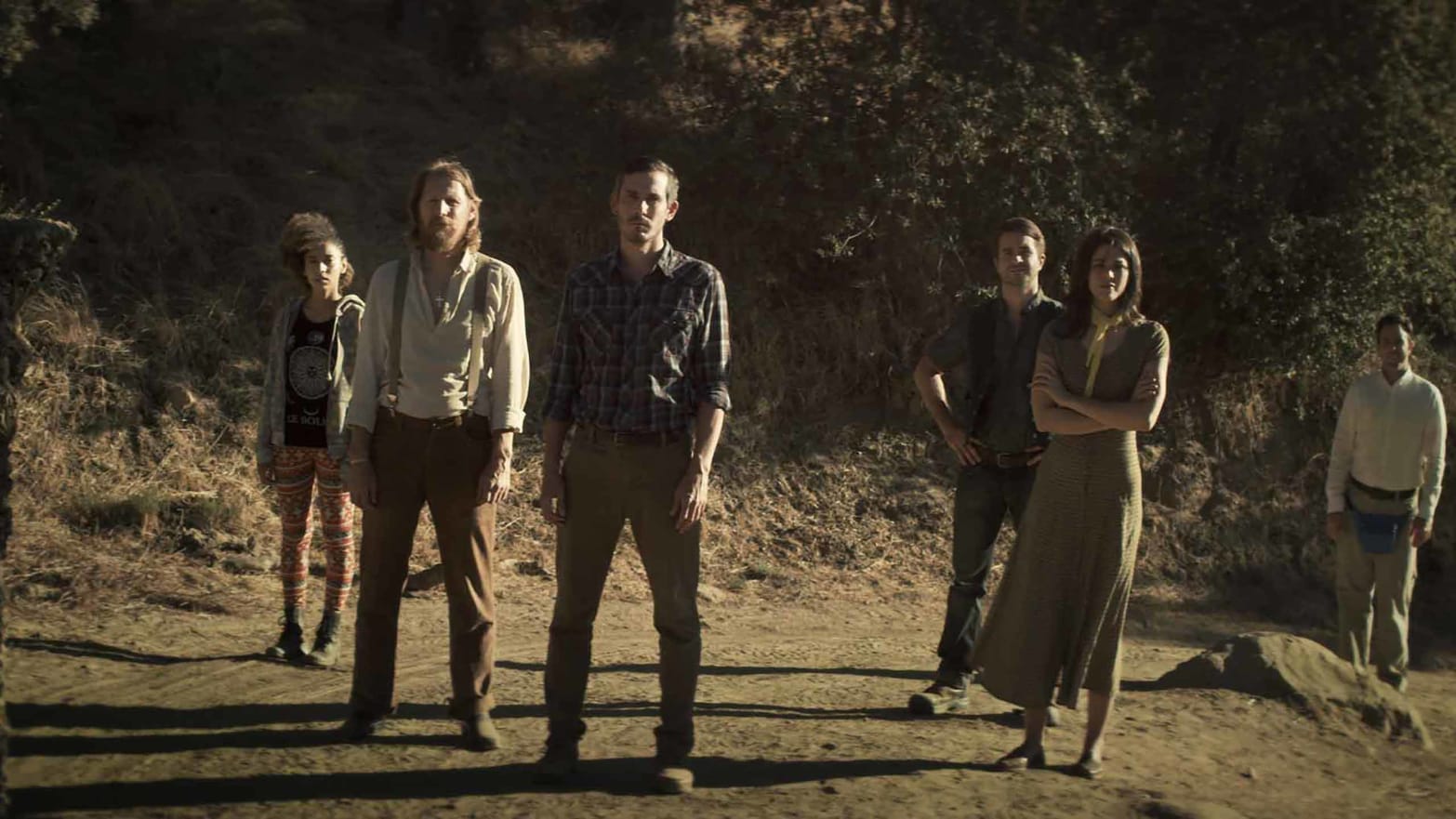
The Endless (2017) – How to Portray Fear

I am not going to lie. Never have I ever watched a horror film in an actual cinema mainly because I am not the most courageous kind of audience who would come in to the theater without any kind of cover or any way to pause the movie when I want to so I can stray from potential jump scares.

Nonetheless, I have noticed a recurring direction in the most recent horror movies: they are starting to become less frightening. Not that it is a negative critique, however (at least I can rest more easily), but I have seen that they are starting focus less on the technical ways of scaring people and more of the “symbolic” ways of scarring the audiences. Get Out (2017) did not have your typical frights but left the impression of that racism isn’t shown in hatred; it is also shown obsession. Hereditary (2018) did not just let something scary come out of nowhere; it lets it linger on-screen which I think is much worse. And then there’s The Endless (2017), which I frankly never found it to be horrifying at all.

Where Get Out delves into social realism while Hereditary deals with familial despondency, The Endless shows “the fear of the unknown.” Throughout the film, the audience literally could not understand what was going on, but little by little, when the clues come together, they make more sense, yet this “unknown” antagonist is not what intrigued me the most of this film. The most compelling of all was the human behavior in how we react to the unknown, and it was shown in two ways.

The first one was when Camp Arcadia decided to play a lost videotape, and it projected the two protagonists, the Smith brothers, “promoting” or misrepresenting the camp by portraying them as a radical Christian cult. It’s interesting to note as well that prior to these events, the film revealed through a news report that the two were rescued from the so-called cult. At first, the anger of Hal, the supposed key figure of the camp, does not seem justified, until as the film progressed, it was revealed that it was not a cult after all. They were a group helplessly stuck in the time loop and submit to it.  This reveals a theme of incorrect identification and the dire effects of it. Because we misrepresent people or groups, we end up castigating them when they are supposed to be helped.

If only they could be rescued if they weren’t seen as a cult…

The second was when Aaron admitted to Justin that he wanted to stay in Camp Arcadia despite being set in a dangerous time loop. As unreasonable at it may sound, Aaron made a compelling argument how that setting was better than living out repetitive lives in the modern world they resided in after escaping the camp. To be fair, he did have a point, as Camp Arcadia seemed like self-sustaining community with motivating activities and varying occupations. Then again, Aaron just brushed off the trade-off or the catch. Here, it reveals another feared theme of submissive adaptation to the shortcomings of one’s environment.

The saddest part of the two ideas is that, in the real-world, they somehow manifest themselves. In Europe, some mislabeled refugees as Muslim terrorists or invaders, an idea that is a product of the far-right movements. Across the world, people think that it is okay to adapt to a warming climate rather than fighting back because we passively think everything will be okay. Some of us just don’t think so.

In silent contemplation,

JoMar Fernandez a.k.a JMCthefilmystan

Sorry to Bother You (2018) – Social Commentary in Film (Part 2)

I forgot to mention in the previous blog post another reason why I love films of its kind. I already liked it at first viewing because of how overwhelming its elements and themes are, but the more I dug deeper and analyze them further, suddenly the movie looked better by tenfold than the last time I watched it. It was such the case when American Beauty (1999) became my favorite film of all time when I realized why it was more than just a critique of the American middle class lifestyle, as movie analysts would suggest, or when Roma (2018) best exemplified how a simple nostalgic story of a housekeeper can be made fantastic with audio-visual splendor presented by the talented director Alfonso Cuarón, and once again, my enthusiasm peaked thanks to another recent film, Sorry to Bother You (2018).

This film is extremely contemporary to today’s social-economic views, and two themes related to that became immediate (and what we could tackle for this blog post): capitalist critique and workers’ privilege. Combine them with the aspects of the magical realism genre, and you get a film whose fantasy elements are deeply rooted in a worldwide reality.

Marxism: Attacking Capitalism’s Core

Critiques against capitalism have proliferated as far back as the late 18th century, and the most prominent was German economic philosopher Karl Marx. His general critique included the system built on the need for profit and the resulting exploitation of human labor to achieve it, and all of this is rooted in the capitalists’ conflicting balancing act with earning more wealth and maintaining the modes of production through that wealth; hence, Marx believed that the system is fragile and will eventually be protested by the proletariat, the working class.

An additional note of Marx’s philosophy to consider, though not discussed normally in academia, is how the changing modes of production other than capitalism have been maintained by so-called “superstructures” or institutions and polities that legitimize the practices of the economic systems through morality and law. Among them was religion, and Boots Riley made this apparent throughout the film with crucifixes and religious protests.

Of course, there were counterarguments made by the other side of the economic spectrum; they mention how the capitalist work culture promotes the virtues of tenacity, competence and meritocracy and consequently alleviated nations from abject poverty through their accumulated wealth from their labor, an aspect that Marx ironically concurred to an extent in “The Communist Manifesto” and that Riley was aware of in the film, shown in Steven Lift’s statement in a news interview.

Steve Lift: We’re saving the economy. I mean, we’re saving lives!

Still, Marx’s supporters would disagree, as these arguments glossed over the exploitation problem and expands this by saying how these diligent and hard-earning laborers are victims of their own success. It is hilariously portrayed in the movie’s TV parody of MTV’s Cribs with the WorryFree workers proudly showing off their posh bunks, and Cassius Green’s road to success. We see gradually as Cassius climbs higher and higher in the work hierarchy, he becomes more disenchanted with his fellow workers’ protests and his love interests’ protest art, illustrating one of the prices of privilege.

Then comes perhaps the most unusual element of the film that gives hints to a literary genre called magical realism.

Magic Realism

Firstly, a background on the used genre is needed. Magic realism was made popular by the likes of Gabriel Garcia-Marquez, a Colombian writer and winner of the Nobel Prize for Literature, and Nick Joaquin, among the most iconic writers in the Philippines. A famous example would be the short story “A Very Old Man with Enormous Wings” where a angel-like figure brought out the greed and selfishness of the townspeople and tourists that found him. The narrative is very reminiscent to a frightening character: the equisapiens.

WorryFree owner Steve Lift eerily explained how this human-horse hybrid makes stronger and more submissive workers, even to the point of asking for Cassius if he could lead a civil rights movement for them to avoid any violent uprising against the abusive company. All of that was said with an enthusiastic tone, reflecting rather apathetic characterization of capitalists.

                To conclude, I guess the film was “Sorry to Bother [Us]” in spite of offering us rather upsetting elements on-screen.

Intrigued,

JoMar Fernandez a.k.a JMCthefilmystan

Sources used:

Marx, Karl. 1947. The German ideology, parts I & III, ed. R. Pascal, 146–200. New York: International Publishers.

Marquez, Gabriel Garcia. 2007. “A Very Old Man with Enormous Wings.” North Dakota State University, translated by Gregory Rabassa.

Repo Man (1984) – Social Commentary in Film (Part 1)

I must admit my strong favoritism for films projecting philosophical and societal messages. They would vary from the cathartic kinds like American Beauty (1999) and Roma (2018) to the stern ones like Three Billboards Outside Ebbing, Missouri (2017). In any case, they splendidly reveal a reality of the human person and society, be it of a redemptive or a deplorable quality.

Perhaps I have found another addition to this list in Repo Man (1984), yet at first viewing, it did not seem like a film that I would find as interesting or as enjoyable as the three films aforementioned because it initially looked like a film whose elements are all over the place. It had extraterrestrials, evangelists, government officials, conspiracy theorists, and so on, yet at the same time, I did not care about it; it may look like a mess, but it is surely not a boring mess and it was truly rewarding when you see all of its aspects cohesively come together in its conclusion when it all made sense.  

And this is where I wanted to start the discussion, for one part I noticed curiously was how Miller, among the side characters, became the sole person (not counting Otto) to be openly welcomed by the possessed Malibu car while the other characters attempted but were uninvited by it. What then made Miller some kind of “The Righteous One” to the vehicle in comparison to the televangelists, the repo men, the government, among others?

After re-watching certain scenes, one dialogue in particular stood out when Miller and Otto were conversing on coincidences and time machines while they burned stuff taken from the repossessing job, one of which was a book named Dioretix: The Science of Matter over Mind.

Miller: I think a lot about this kinds of stuff. I do my best thinking on the bus. That’s how come I don’t drive, see?

Otto: You don’t even know how to drive.

Miller: I don’t wanna learn how. I don’t wanna learn. See? The more you drive, the less intelligent you are.

It would make sense on the surface, as when one drives, he needs his full concentration, and he would not focus on anything but what is in front of him; hence, we never saw him taking part of the repossession, but mind the fact that he does not want to learn which could suggest how focusing on driving can also be a subtle and ironic metaphor for the blindness of society to its surroundings.

Come to think of it, perhaps it would explain the ending when Miller and Otto rode the alien vehicle when the others could not. Only he was able to comprehend its existence and use because the others were focused on other stuff. The filmmakers have portrayed this with a very odd production design that only the audience took notice but the characters took it as part of normal life; this is a brilliant use of dramatic irony. Otto’s parents blindly donated much of their wealth to a televangelist, citizens buy and sell whatever foods and drinks in the store in spite of its peculiarly generic branding, and so on.

As the burned book suggested, matter was chosen over mind, resulting to the people failing to see the broader picture, as Miller theorized. It really tingles my spine thinking how the filmmakers want to show how they see modern life in their lens through a fun-fulled motion picture.

In awe,

JoMar Fernandez, a.k.a JMCthefilmystan

Velvet Goldmine (1998) – Visualizing Isolation (part 2)

Brian Slade, the pop rock musician, and Arthur Stewart, fan-turned-journalist, are respectively the thesis and antithesis of queer personalities of a glamorous bygone era the film pays tribute to, with the former’s fearless expression of his sexual fluidity and the latter’s seclusion from his queer interests. As the film progresses, we see how the two’s journeys would go onto different directions in a similar fashion to the primary protagonists of My Own Private Idaho, all revealing the paradox of one’s open identity resulting to one’s loneliness.

We see throughout the film how Brian Slade’s immediate success were founded on his brave and bold expression of his bisexuality in the debut of the persona named Maxwell Demon to which the media sensationalized it with reports of public ambivalence while simultaneously, adolescent fans like Arthur Stewart with enthusiasm finally found a figure they could relate. Interestingly, we see in the film’s early scenes how both of this self-discovery and experimentation started with an infatuation with another. For Brian Slade, it was when he was mesmerized by the sultry stage presence of fellow rock star Curt Wild, and in turn, Brian Slade’s coming out catches the optimistic attention of Arthur.

We then see the difficult progression they share in fulfilling and exploring their queer tendencies, albeit in a secretive manner due to other circumstances. Brian Slade, in spite of already being married to Mandy Slade, shared a sexual affair with Curt Wild and Arthur Stewart feared teasing in attempting to purchase one of Slade’s albums and masturbate to the album covers. We see an irony portrayed in these two situations where even with the coming out of sorts, the fears and secrecy linger within.

Their differences come with the consequences of their actions, both to the secondary characters they are related to and to themselves. Brian Slade soon found himself becoming unhappy with a career that once brought him the jovial freedom of self-expression, as his marriage with Mandy started to fall apart and his relationship with Curt started to interfere with their respective careers. Such event hinted a reason to eventually stage his own death. It is the exact opposite for Arthur where as soon as he gets out of his own parents’ home to be with other glam rock enthusiasts, he becomes a happier and freer man (at least until he had witnessed Slade’s assassination and learned that it was a hoax did his appreciation for him was lost). Here, Brian Slade’s happiness ages and fades gradually while Arthur’s own just started to flourish.      

This dichotomy thus leads to the theme of art’s artificiality in the perspective of the maker and viewer which begs the question: does this artificiality be considered a lie of some sorts or something truthful. On one hand, the artistic creation is supposedly a projection or representation to something truthful or factual of the character. Maxwell Demon’s androgynous style best projected his homosexual side, and by extension, Arthur Stewart. On the other hand, however, is it really the complete picture one wants to be shown. Physical aesthetic expression could still be bended at the creator’s will. Slade was brave enough to show it off glamorously, but not entirely enough to include the complications and pitfalls of it. The same goes with Arthur where, although a fan of the rock star, he does not show it as fully as both Slade and other fellow fans.

 If you think about it, in real life, these contradictory actions of concealment and openness do show in the music industry. How real are the musicians and artists? It is a curious yet frightening inquiry in itself.

Still in discernment,

JoMar Fernandez, a.k.a. JMCthefilmystan

My Own Private Idaho (1991) – Visualizing Isolation (part 1)

Among the activities I love doing while I have free time in Ateneo is visiting the Arete Art Gallery to look at the paintings and sculptures, and what made them interesting every time I observed them is that they do not necessarily narrate a linear and progressing plot line like the movies. Instead of telling “what happens,” it presents “what is it” and it makes me wonder if motion pictures can do the same. Initially, it seems unlikely because they “move” in the sense that characters must do something and go somewhere to make a story, but the more I think about it, the more I realized that it perhaps can tell “what is it”, or to be more accurate, “who is he,” and one film could have done that: My Own Private Idaho (1991)

Of the films that we have viewed so far, this is perhaps the most difficult to comprehend. Its ineffability lingered in my mind for a more than a week since I have viewed it in class, and I needed to hear more insight from the class discussions, as well as research more on the so-called New Queer Cinema genre that the film took part of. Two key ideas stood out: loneliness and avant-garde, as explained in a review by Desson Howe.

This exquisite, cinematic poem is about the eternal search to belong somewhere, and the lonely landscape of the soul. It draws from a limitless palette of enigma, feelings and images. It replays in the mind as a painting — a complete story, yet also frozen in time.”

Desson Howe, Dream State: Private Idaho (1991)

Alienation seems to be a key theme in films centered on queer characters of the period, and for unfortunate reasons such as conservationism, HIV/AIDS pandemic, among others. But here, the film displays mostly on the effects of such castigation than their causes to the point that their sexual orientation is almost a mere side note. This portrayal also makes characters like the protagonist Mike more human in the sense that his isolated being has different dimensions to it, and such are presented with idiosyncratic film making methods, from nostalgic cinematography to a missing plot structure to the countryside setting.

A peculiar key story element utilized is the narcoleptic episodes of Mike when they vividly show childhood memories of his mother in a vintage style. Perhaps the usage of 1960s or 1970s videography aims to portray how very aged and suppressed these memories are which presents how long-term memory works, as explained by psychology. The film exemplified the retrospective, episodic memory fueled by sentimental emotions.

Mike’s alienated character was vividly shown to have been built upon the lack of a usual plot structure, a quality of most avant-garde films, to focus more on the character’s vulnerability than a progressive story of redemption; hence, giving the illusion of being “imprisoned” in a hustler’s lifestyle. Furthermore, the countryside setting of Idaho also “helped” in portraying the alone and static character that he has become. The roads seemingly go on endlessly with no destination, the hills and plains are vast and distant from each other, among others. All these elements have Mike at the center of it all to portray how small and lost he is.

These make My Own Private Idaho, therefore, one of the quintessential examples of avant-garde. While it does center on a message or theme, it does not necessarily tell a story needing to go from one point to another; rather it is a visual, representative “painting” of one’s state of mind.  

Yours truly,

JoMar Fernandez a.k.a JMCthefilmystan

Futureless Things (2014) – Reflecting Current Society’s Culture

I am not going to lie; this may be the first movie to be shown in the class that I am not a fan of (at least at first viewing) simply because it did not really make much sense. The big problem with this description I gave, however, is that not all films are made that way; their structures are quite malleable and can be made in almost whatever form and even then, no matter what film I am supposed to watch, I somehow get it, somewhat like the way I have viewed the orderly mess that was Schizopolis (1996). How?

As I watched the individual shifts of the workers, something felt and looked…familiar. They were not reminiscent of personal experience, but they reminded me of the Korean people themselves. Being a history major, I have always held an interest in modern South Korean history because of how events molded the country from one of the poorest in the world to one of the most affluent. Even at the beginning of the film did it implicitly acknowledge this.

When the descendants asked us in the future what our generation bad done for them and what we have achieved for our country, let us proudly answer them without any hesitation that we labored again and again with faith in the modernization of our country

Although that alone is impressive, I have always been reminded of the time my Asian History teacher called Korea “a beautiful country but with a sad history.” My reaction was of confusion; how can a country that pulled off a seemingly impossible economic miracle ironically have a sad history? Curiously, I did a bit of reading and even went to Seoul on vacation, and I found some quite upsetting contemporary background surrounding it, and each of the subplots in Futureless Things (2014) vividly reflected some of this a lot (albeit not completely).

A prominent theme that surrounded this film is the negative outlook on work, which is tangent to the movie’s introductory words. Immediately, one of the customers reprimanded the new worker, stating that getting paid is no jest. Next, we see how an aspiring actor struggles with balancing his obligation to serve the customers. There is also the female worker with the scar who, despite being treated respectfully and appreciatively by one elderly for the hard work, is mistreated and misunderstood by her superiors.

But for such a pessimistic viewpoint, it treats work still as a “necessary evil” because of how Koreans, in general, are very goal-oriented. For one, the manager of the convenience store feels disappointed in not getting enough income to pay off his debt, to the point where he committed self-asphyxiation in the film’s conclusion. Another who is learning English while in his shift attempts to communicate in the language to foreigners, but unfortunately was flat-out rejected or reprimanded for his efforts.

Another would be the viewed disregarding of certain topics and the unfamiliarity of other cultures, especially in a cyclic and/or rushed work setting of buy-and-leave. The auditionee (and by extension the audience) clearly grows impatient when two of the customers were discussing Christianity and philosophy. The North Korean defector feels pretty hurt by a customer’s stereotypical generalizations of her former home country. There seems to be a passive disposition regarding those subjects that, while interesting, are brushed off as trivial stuff.

All of these together create some form of frank critique that being a prosperous nation has its own downfalls. For the film to start with a very optimistic and confident quotation, it quickly shifted gears and showed how mundane and unfair modernization has become, and the setting and happenings of a convenience store provided a fitting portrayal of it.

Sincerely

JoMar Fernandez a.k.a JMCthefilmystan


Trainspotting (1996) – Creating Characters

A lot could be debated regarding the most essential film element at a movie makers’ disposal. The issue here is that it would either depend on their specific use on a motion picture or that there is actually a general quality among most of them, be it the good or bad ones. In the case of the latter, I argue that it is character. This, however, is not to disregard the other indispensable elements. If so, why did I pick character as the most powerful?

There are three straightforward reasons. One, in most mainstream films, the audience would most likely pay attention or interest to the characters more than all the other parts of the film. Arguably, elements like the cinematography and the visual effects must “pay attention” to them. Two, film viewers pay attention to these characters, and subsequently adore or abhor them, because of how relatable it is to them through human experience. If anything, the events experienced and caused by these characters are derived exactly by genuine experiences. Last, and not the least, is that they are the primary drivers or controllers; whatever action, word and choice they make are the “tools” to direct to where the storyline rises or falls.

Trainspotting (1996) is one of those films that exemplified this the best. Here, filmmakers utilized different characters, create interaction with them, and build the plot focused on Renton, played by Ewan McGregor, from not only what he does but also what his friends do.

The structure is built with five steps.

First is the accepted status quo of Renton founded on his shortcomings of drug addiction, as expressed in the film’s most iconic quotations.

“Choose life… But why would I want to do a thing like that? I chose not to choose life. I chose somethin’ else. And the reasons? There are no reasons. Who needs reasons when you’ve got heroin?”

– Renton, Trainspotting (1996)

Then comes the first “realizations” of such predicaments, by making the character aware of it like an elephant in the room. The more apparent, perhaps the better. They show it through by surrounding him with very visceral sights like a baby walking on the ceiling, his comrades appearing mysteriously, and the dance club music intensifying with these delusions. Put them together to form one of my personal favorite scenes in the film.

Awareness of the conflict soon leads to challenging obstacles which assists in revealing the causality of it. In the first scenes of the film, we see Renton’s first attempts to come clean through setting up his own home.

“Relinquishing junk. Stage One: preparation. For this you will need: one room which you will not leave; one mattress; tomato soup, ten tins of; mushroom soup, eight tins of, for consumption cold; ice cream, vanilla, one large tub of; Magnesia, Milk of, one bottle; paracetamol; mouth wash; vitamins; mineral water; Lucozade; pornography; one bucket for urine, one for feces, and one for vomitus; one television; and one bottle of Valium, which I have already procured, from my mother, who is, in her own domestic and socially acceptable way, also a drug addict.”


– Renton while setting up his flat, Trainspotting (1996)

In fact, we saw this direction again when Renton decides to work and reside in London.

“I settled in not too badly and I kept myself to myself. Sometimes, of course, I thought about the guys, but mainly I didn’t miss them at all. After all, this was boom town where any fool could make cash from chaos and plenty did. I quite enjoyed the sound of it all. Profit, loss, margins, takeovers, lending, letting, subletting, subdividing, cheating, scamming, fragmenting, breaking away. There was no such thing as society and even if there was, I most certainly had nothing to do with it. For the first time in my adult life I was almost content.”

– Renton describing his new job in London, Trainspotting (1996)

In both cases, however, the film gives subtle hints that he himself may not have been causing most of his addiction problems. It happens when (1) one of his comrades also attempted to follow his steps to prove otherwise…

“The down side of coming off junk was that I knew I would need to mix with my friends again in a state of full consciousness. It was awful: they reminded me so much of myself I could hardly bear to look at them. Take Sick Boy, for instance, he came off junk at the same time as me, not because he wanted too, you understand, but just to annoy me, just to show me how easily he could do it, thereby downgrading my own struggle. Sneaky fucker, don’t you think?”

– Renton on Sick Boy, Trainspotting (1996)

… and (2) when a fugitive Begbie interferes in Renton’s living space.

“Renton (V.O.) – Begbie settled in in no time at all.”

Begbie opens a can of beer. Renton closes the door.

INT. HALLWAY OUTSIDE BEDSIT – DAY

Renton closes his door. He is about to walk away when he heard Begbie shouting.

 BEGBIE (from the bedsit) – Rents, Rents, come fucking back here.

Renton opens the door. Begbie is holding out an empty packet of cigarettes.

Look.

“RENTON – What?

 BEGBIE – I’ve no fucking cigarettes.”

Begbie throws the packet down to the floor. It lands near the door. He has turned back to the television and takes a swig of beer.”

This leads to the second “realizations” that points this root cause: the negative and controlling influence of his friends. All of this leads to the open-ended resolution of the character finally choosing life, presented in the dialogue opposite to the introduction.

                Conclusively, all have shown that while other film elements are essential such as dialogue, the setting, the props, among others, they all come together in presenting or “clothing” that central powerful element of narrative film: the character.

Sincerly,

JoMar Fernandez a.k.a JMCthefilmystan

Source used:

https://www.raindance.org/scripts/Trainspotting%20script.pdf